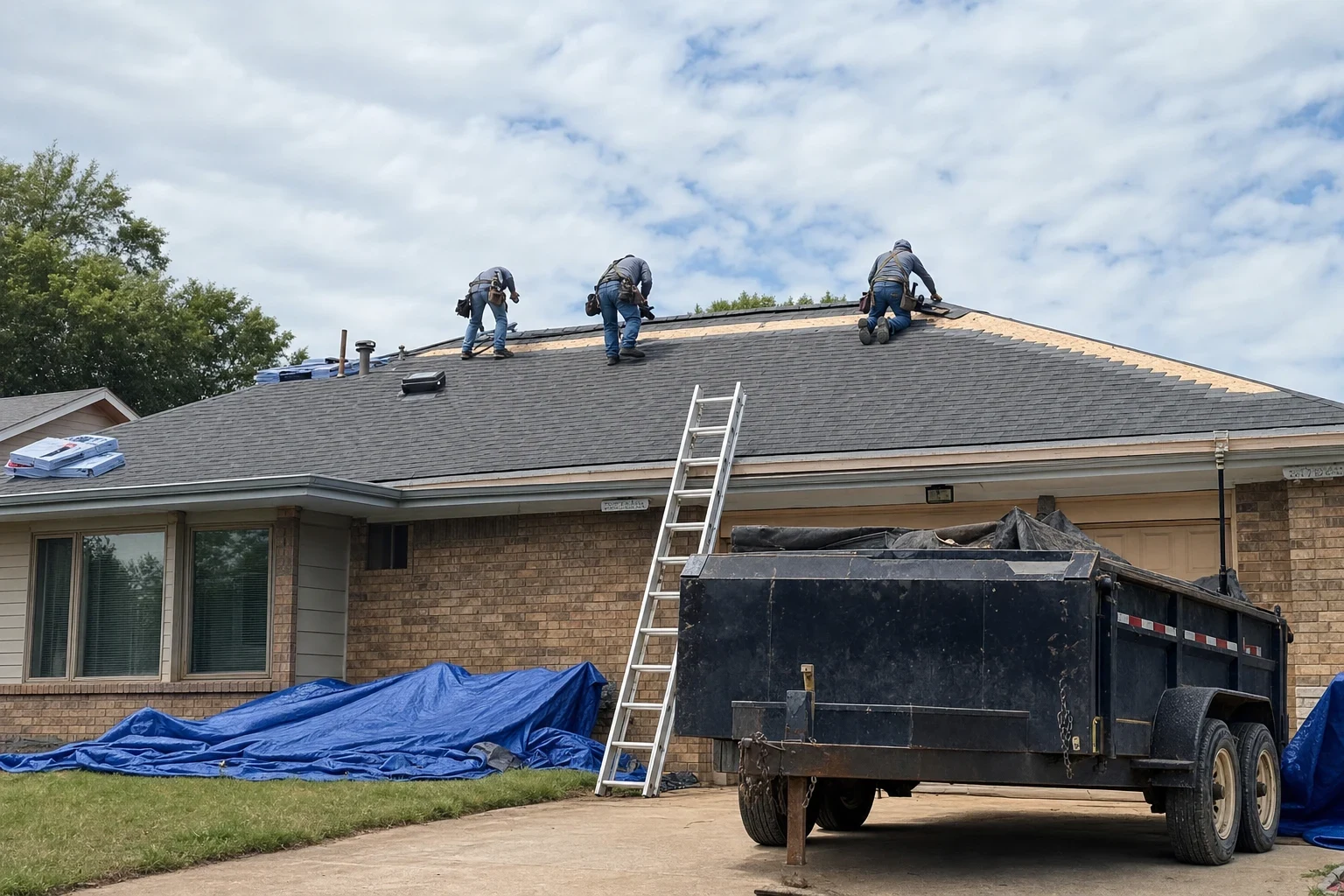
How Long Does Water Damage Take to Dry After a Roof Leak in The Village?
Drying out after a leak depends on how wet things got, what they are made of, and whether the water has truly stopped coming in.
How long does water remediation take to dry?
Most water-damaged rooms take about three to five days to dry with fans and dehumidifiers running, and longer when subfloor, framing or roof decking got soaked. That clock only starts once the leak is stopped. If rain can still get in, nothing really dries, so the roof repair comes first. Talk it through with us at (405) 849-7849.
Why the roof has to be fixed before anything dries
Drying equipment can pull a lot of moisture out of a ceiling, but it cannot keep up with a roof that still lets water in. One more storm and the wet insulation, drywall and framing are right back where they started, and the drying days you already paid for are lost.
Our part of the job is the roof. We find where the water is getting in, which is often a lifted shingle, a cracked pipe boot, worn flashing around a chimney or a nail that backed out, and we fix that spot. When the damage is limited, a targeted repair is usually the sensible answer. A tarp can buy time, but it is not a repair, and it tends to flap loose in strong spring wind.
What changes how long drying takes
Two leaks that look the same from inside can dry on very different timelines. These are the things that make the biggest difference:
- How long the water sat. A drip caught the same day dries far faster than a slow leak that soaked insulation for weeks.
- What got wet. Painted drywall gives up moisture quickly; thick wood framing and layered materials hold on to it.
- Humidity and season. Muggy summer air in central Oklahoma slows natural drying, while dry winter air helps it along.
- Airflow. Closed attics and wall cavities trap moisture, so air has to be moved through them on purpose.
- How many layers are involved. Water that passed through the roof deck, the attic insulation and the ceiling has three things to dry instead of one.
Typical drying times for common materials
These are general ranges, not promises. A moisture meter is the only real way to know, but they help you plan.
- Drywall ceilings: often two to four days with good airflow, unless the panel sagged or crumbled, in which case it is cut out and replaced.
- Fiberglass attic insulation: can sometimes dry if it was only damp, but matted or heavily soaked batts usually come out.
- Blown-in cellulose: tends to clump and hold water, so it is usually replaced in the wet area.
- Wood framing and ceiling joists: several days to more than a week, depending on how deep the water went.
- Roof decking: plywood often dries once the leak is sealed and air can reach it, while soaked OSB may swell or go soft and need new sheets.
How to tell it is actually dry
A ceiling can feel dry to the touch while the wood behind it is still holding water. Painting over a stain too early is one of the most common mistakes we see, because the stain bleeds back through and any trapped moisture keeps working on the material.
Mold can start growing in damp materials within a day or two, which is why the drying work matters as much as the repair. If the water reached your ceiling, insulation or walls, a water mitigation crew with meters and dehumidifiers is the right call for the inside of your home. We take care of the roof so their work holds up.
When repair makes sense and when replacement does
Most leaks we look at can be repaired. If the decking is solid and the shingles around the leak still have life in them, we fix the spot, replace any soft sheets of decking, and you are done. We will tell you plainly when that is all you need.
Replacement starts to make more sense when the decking is soft in several places, the shingles are brittle or losing granules across the whole roof, or the roof has leaked in more than one spot after the same storm. In those cases, patching tends to chase one leak after another. Either way, we take photos of what we find so you can see it for yourself and share them with your insurance company if you file a claim.
More questions about drying after a roof leak
Something not covered here? (405) 849-7849
Can I just run fans and the air conditioner myself?
For a small spot of damp drywall caught quickly, fans and your AC can help a lot. For soaked insulation, sagging ceilings or wet framing, home fans rarely move enough air to reach the hidden layers, so bring in proper drying equipment.
Does a dry stain on the ceiling mean the leak is gone?
Not always. Stains often dry between storms and come back with the next rain, so the roof should be checked even if the spot looks dry today.
Will my insurance cover the drying and the roof repair?
That depends on your policy and on what caused the leak, and only your adjuster can say for sure. We can explain what we found on the roof and give you photos to support your claim.
Stop the water first, then let it dry
Call and tell us what you are seeing. We will set a time to look at your roof, find where the water is getting in, and give you an honest answer on whether a repair will do the job.