ServicesStorm Damage Repair
Storm Damage Repair in The Village
Hail and high wind can leave damage you can't see from the driveway. We get on your roof, photograph what the storm did and fix what can be fixed. If a full replacement makes more sense, we show you why and let you decide.
What storm damage repair covers
Hail bruises asphalt shingles, knocks loose the granules that protect them from sun, and dents vents and gutters. Wind lifts shingle tabs, breaks the adhesive strip that holds them flat and peels back flashing. Some of this is obvious from the yard. Much of it only shows up when someone walks the roof and looks closely.
We start from repair. A lot of storm-hit roofs need a slope of shingles, new flashing or a few pipe boots, not a full tear-off. When the damage runs across most of the roof, or the roof was already near the end of its life, we tell you plainly and explain why roof replacement is the better use of your money.
If you plan to file an insurance claim, we document everything we find so you have clear records. Your insurer and adjuster decide what is covered. We help you understand the process, but we don't act as your adjuster.
What the work includes
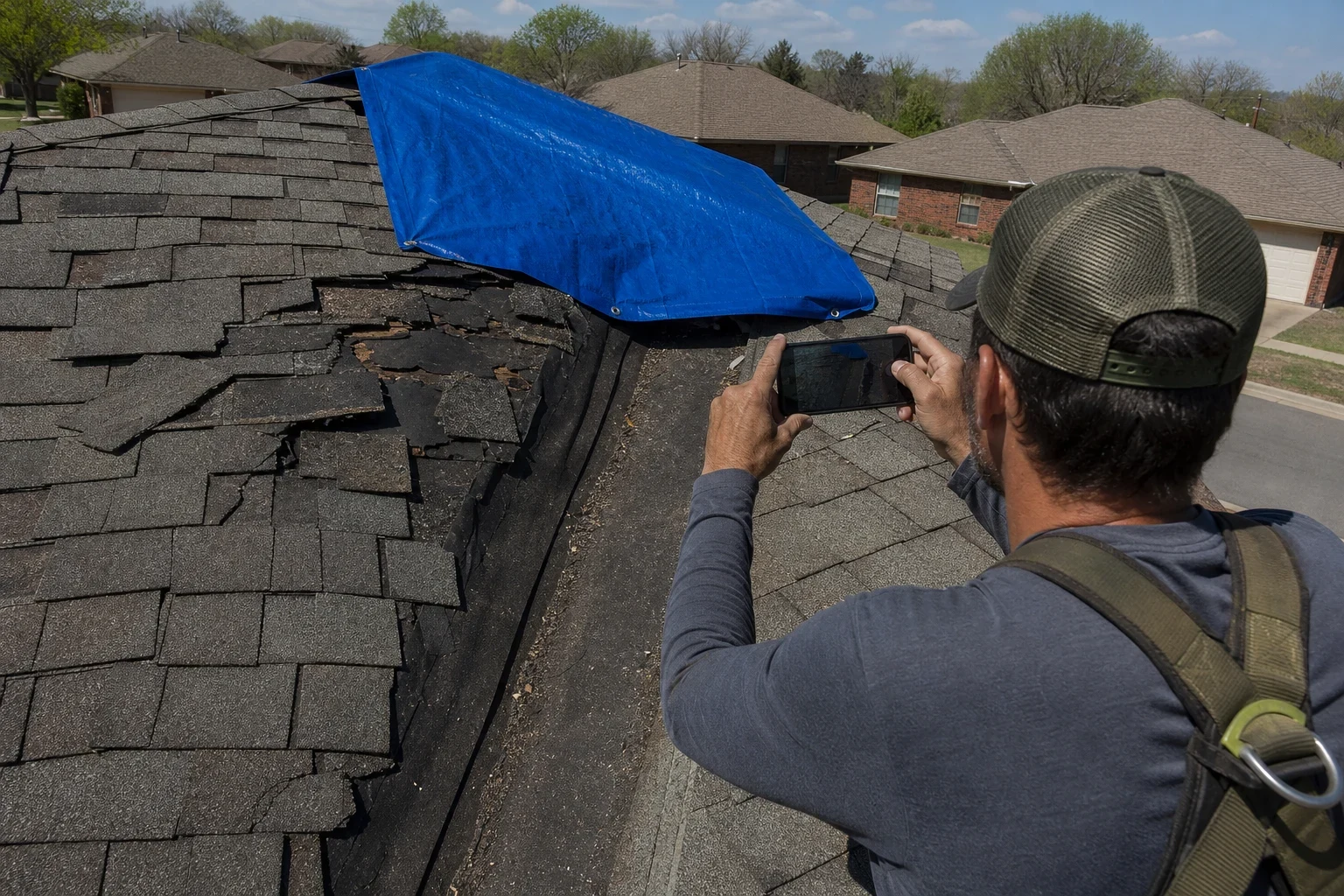
A full roof walk with photos
We check every slope, ridge and valley, plus vents and flashing. You get photos of each damaged spot so you can see exactly what we saw.
Shingle and tab repair
Creased, cracked or missing shingles come off and new ones go in, hand-sealed so they lie flat and hold in the next wind. We track down the nearest color and style still being made, and show you a sample before it goes up.
Flashing, vents and pipe boots
Wind loosens flashing at walls and chimneys, and hail cracks plastic vents and rubber boots. These small parts cause many post-storm leaks, so we fix or swap them as part of the job.
Temporary protection when needed
If the storm left an opening, we tarp it securely to keep water out of your home until the permanent repair is done.
Dented or pulled-away gutters
Hail and falling limbs bend gutters and loosen downspouts. We repair what's damaged, and our Gutters page covers new gutters if that's the better answer.
A written scope you can share
You get a written list of what we found and what we recommend, which you can hand to your insurance company if you file a claim.
Signs the last storm damaged your roof
- Shingles or pieces in the yard
- Even one or two loose shingles mean the wind found a weak spot. The ones next to it may be lifted too.
- Granules piling up at downspouts
- A sudden heap of dark grit at the bottom of a downspout after hail usually means shingles took hits.
- Dents on soft metal
- Dings in gutters, vent caps or the fins on your outdoor AC unit tell you the hail was big enough to check the shingles above.
- A new stain on a ceiling
- A fresh water spot after heavy rain often traces back to lifted flashing or a cracked pipe boot.
- Neighbors getting roof work
- Storms in central Oklahoma tend to hit whole streets. If roofers are on houses near you, it's worth having yours looked at too.
How a storm repair job runs
- 1
You call and tell us about the storm
We ask when it hit, what you've noticed and whether anything is leaking now. Then we set a time to come out.
- 2
We inspect and photograph
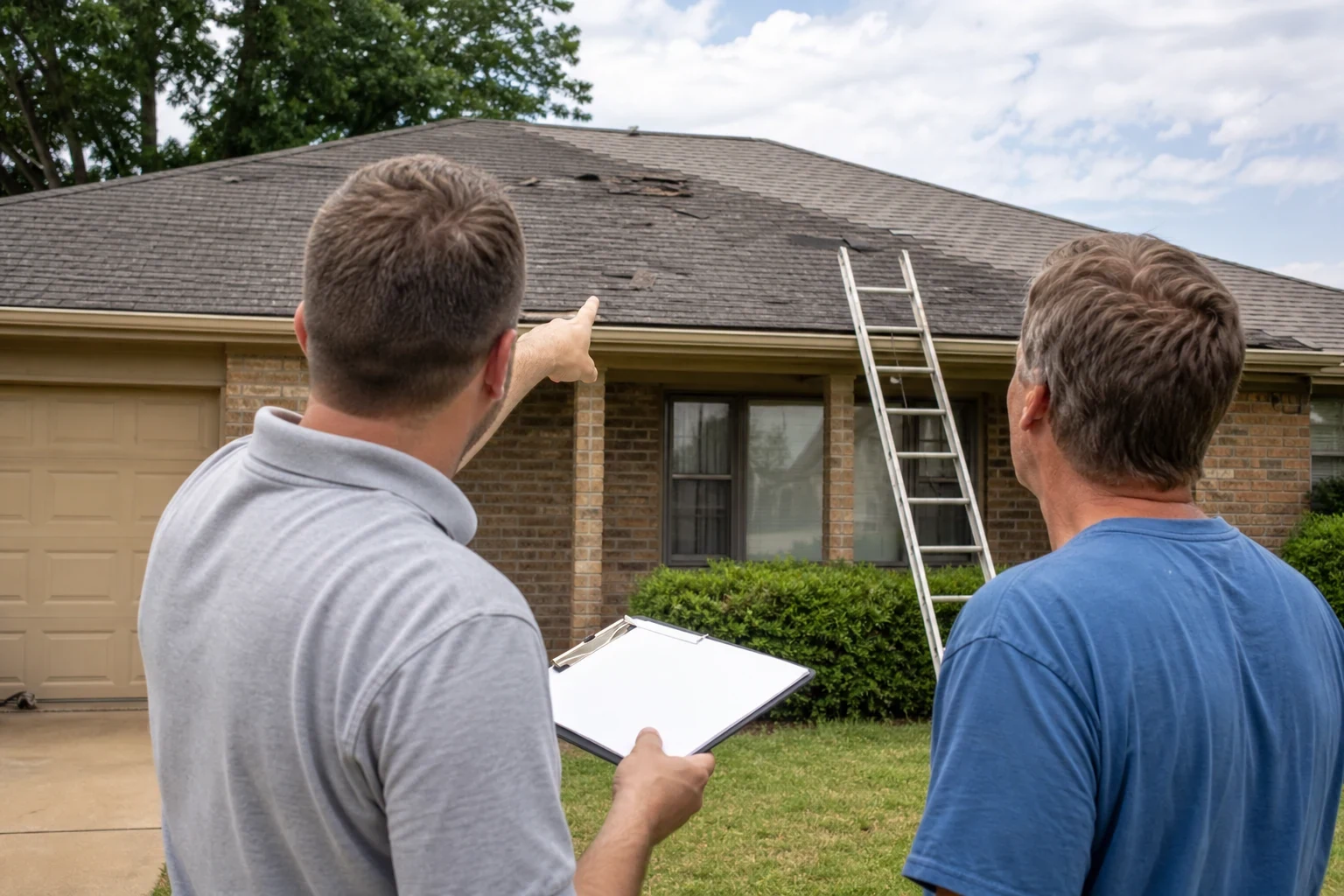
We walk the roof, check the attic if there's a leak, and photograph each damaged area. Before we leave, we walk you through what we found.
- 3
An honest repair-or-replace answer
You get a written scope. If repair will hold, that's what we recommend. If it won't, we explain why and what a new roof would involve.
- 4
Repair day and cleanup
We protect your landscaping, make the repairs and haul off old materials. Before we go, we run a magnet across the yard and driveway to pick up stray nails.
What moves the cost of storm repair
Every storm hits a roof a little differently, which is why we don't put a number on the job until we've been up there. Each repair sits on its own line in the written scope, so you can see where the money goes. If insurance is involved, your policy and deductible set what you pay, and only your insurer can tell you that.
- How much of the roof was hit
- A few torn tabs on one slope is a small job. Hail bruising on every slope is a different conversation.
- Shingle matching
- Some older shingle styles are discontinued. Finding the closest match, or deciding a whole slope should be redone, affects the price.
- What's under the shingles
- If water got through, the decking underneath may be soft. Rotted boards have to come out, and new decking goes down before any shingles do.
- Pitch and access
- Steep roofs and tight spots near trees or power lines take more time and safety setup.
Storm damage questions
- Will hail mean my whole roof has to go?
- Often it doesn't. Smaller hail tends to ding vents and gutters while the shingles stay sound, and wind usually tears up only certain areas. We check every slope first, and a new roof only comes up when repairs wouldn't last.
- Should I call my insurance company first or you?
- Either order works. Many homeowners like to know what's actually on the roof before filing, so they aren't guessing. We'll photograph and document the damage, but whether it's covered is up to your insurer.
- How soon should I have my roof checked after a storm?
- As soon as is practical. Lifted shingles and cracked boots tend to get worse with the next rain or wind. If water is coming in, tell us when you call so we can plan a tarp.
- Can you be there when the adjuster comes out?
- Yes, if you'd like us to be. We can point out the damage we photographed and answer questions about the roof. The adjuster still makes the coverage decision.
- What if you don't find any storm damage?
- Then we tell you that. If we notice ordinary wear, like aging shingles or a tired pipe boot, we'll mention it so you can plan, with no pressure to do anything now.
Let's see what the storm really did
Tell us when the storm came through and what you've noticed. We'll set a time to walk your roof and give you a straight answer on repair.